
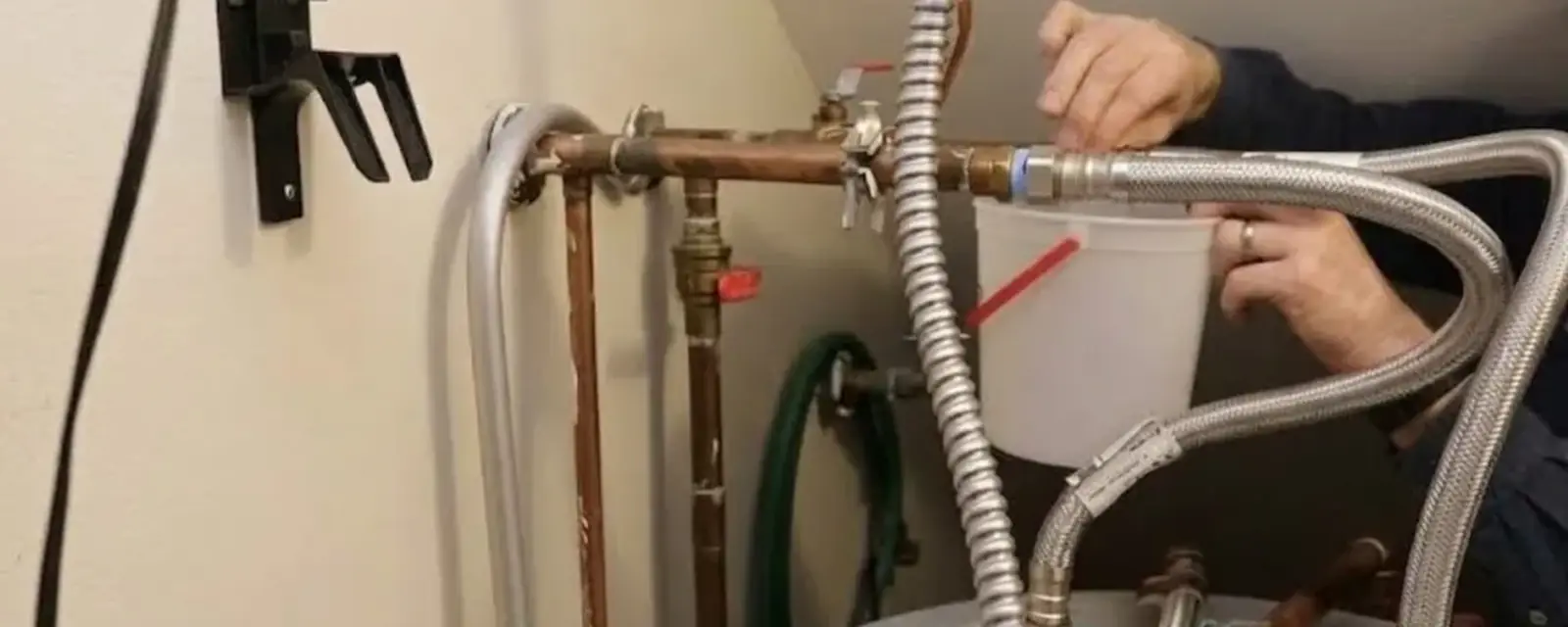
What an Expansion Tank Does
Water expands when it heats. In an open plumbing system, the extra volume pushes back toward the city main. A home with a check valve or a pressure-reducing valve at the entry is a closed system, and the extra water has nowhere to go.
An expansion tank gives that water a place to go. It is a small steel tank with a rubber diaphragm inside. One side holds air under pressure, and the other side holds water. As water heats, the diaphragm moves and absorbs the added volume.
Without the tank, pressure climbs every time the heater runs. That pressure strains fittings, shortens heater life and can make the relief valve drip.
Signs the Tank Has Failed
A failed tank rarely announces itself, but a few signs help.
- The temperature and pressure relief valve drips or releases water.
- Water hammer, a bang in the pipes, when a faucet shuts off.
- Pressure at fixtures that spikes in the morning or after heater cycles.
- Water coming from the tank's air valve when you press the stem.
- A tank that feels heavy and full when you tap it.
A healthy tank sounds hollow near the top and solid near the bottom. A tank that sounds solid all over has likely lost its air charge or has a failed diaphragm. A plumber confirms with a pressure gauge, and that test takes only a few minutes.
Pay attention to timing. Pressure problems tied to the heater tend to appear after a cycle of heating, such as first thing in the morning or after a long shower. A relief valve that drips only during those windows is a strong clue that the tank is no longer absorbing the extra water.
What Sets the Replacement Price
Several factors decide what the job costs. The tank itself is only a part of the picture.
| Factor | How it affects the job | Direction |
|---|---|---|
| Tank size. | Larger heaters need larger tanks. | Rises with size. |
| Access. | Tight closets and ceilings add labor. | Rises with difficulty. |
| Plumbing changes. | Old fittings may need replacing. | Rises when parts are corroded. |
| Pressure issues. | A bad pressure valve may need work too. | Adds a related repair. |
| Time of the call. | After-hours labor applies at night and on weekends. | Higher after hours. |
Ask whether the quote includes draining part of the system, new fittings and a pressure test. Those are normal parts of a clean job and they should appear in writing.
Be cautious about a price that looks far below the others. It may leave out fittings, support for the tank or the pressure check, and any of those omissions can lead to a repeat visit. A clear written scope lets you compare two quotes on the same terms.
What the Replacement Visit Includes
A competent plumber handles this job in a set sequence.
- Check the pressure. A gauge on a hose bib shows static pressure before work begins.
- Shut off the water and drain down. The plumber closes the main, relieves pressure and drains enough water to work safely.
- Remove the old tank. The tank is unscrewed from its tee fitting. Corroded fittings are replaced.
- Set the air charge on the new tank. The charge should match the home's water pressure.
- Install the new tank. It is supported so its weight does not stress the pipe. Thread tape or sealant goes on the threads.
- Restore water and test. The plumber checks for leaks, confirms the pressure and watches the relief valve.
A good plumber will show you the old tank and explain why it failed, because a tank that died early often points to a pressure problem that a new tank alone will not solve.
Pressure relief valve dripping?
Call the 24/7 line. A plumber can test the expansion tank and the home's water pressure.
When It Makes Sense to Add One With a New Heater
Many heater installations include an expansion tank as a standard part. When a closed system is present, a new tank protects a new heater from pressure strain on day one.
If you are already replacing the heater, ask whether the quote includes the tank and whether your system needs one. Our water heater replacement visits include a pressure check as part of the work, and our water heater installation crews size the tank to match the heater.
A tank that is more than a few years old may not be worth keeping on a new heater. Diaphragms wear, and a fresh tank adds little labor when the plumber is already there.
Ask the plumber to write the tank size and the air charge setting on the invoice. That small record helps the next person who services the system, and it shows the job was set up for your home's pressure.
Can You Replace It Yourself?
Some homeowners do it. The job is within reach for someone comfortable with threaded fittings and a pressure gauge, but a few risks deserve respect.
Relieving pressure and draining down incorrectly can scald you with hot water. A tank that is not supported can strain the fitting and leak. A wrong air charge leaves the tank useless.
If a gas heater sits beside the tank, any mistake near the vent or gas line is dangerous. In that case, hire a licensed plumber. Homeowners in Norcross and Johns Creek can call the same dispatch line that serves Peachtree Corners and ask for the earliest window.
Expansion Tank Questions From Peachtree Corners Homes
Not necessarily. A tank is useful when the home is a closed system, which happens when a check valve or pressure-reducing valve sits at the water entry. A plumber can tell you whether yours is closed.
Gwinnett County Department of Water Resources says the pressure-reducing valve in a home is the homeowner's responsibility. The county advises checking pressure at the front spigot.
A dripping relief valve can mean pressure is too high, the expansion tank has failed or the valve itself is worn. A plumber tests the pressure and the tank before replacing parts.
Lifespan varies with water pressure, temperature and installation. Many tanks serve for years, but the diaphragm can fail without any visible sign. A plumber can test it during a routine visit.
You can tap it and listen for a hollow sound at the top, and you can check the air valve for water. A pressure gauge gives a better answer. Turn off the water and relieve pressure before you test.
Permit rules vary by job. The Peachtree Corners Building Division enforces the Georgia State Plumbing Code, so ask the division, or let your plumber confirm what applies to your project.