
What Sets the Price of a Tankless Installation
The unit itself is only one line on the bill. Labor, venting, gas piping, electrical work and disposal of the old tank all change the total. A simple swap in a garage with a gas line already nearby sits at one end. A conversion from an electric tank in a closet to a gas tankless unit on an exterior wall sits at the other.
That is why a phone price without a visit is a rough guess at best. A plumber needs to see the current heater, the gas meter, the path to an outside wall and the shutoff valves before pricing the work with confidence.
| Cost driver | Why it matters | What lowers it |
|---|---|---|
| Fuel type. | Gas units need venting and gas piping, electric units need heavy wiring. | Keeping the same fuel as the old heater. |
| Venting route. | Longer or more complex runs need more material and labor. | Mounting near an exterior wall. |
| Gas line size. | A larger burner may need a bigger line from the meter. | An existing line sized for the load. |
| Existing piping. | Old or corroded lines may need replacement at the connections. | Recent copper or PEX in good shape. |
| Unit capacity. | Larger households need higher flow ratings. | Right-sizing to real demand. |
Gas or Electric: Why Fuel Changes the Job
Gas tankless units use a powerful burner and exhaust combustion gases outside. That means a vent pipe, a combustion air plan and a gas line that can feed the burner at full fire. Electric units skip the vent but draw a very large electrical load. Many panels need an upgrade to support them, and that work is done by a licensed electrician.
If you already have a gas tank heater, staying with gas often keeps the project simpler. If you have an electric tank, moving to gas adds a gas line and a vent. Moving to an electric tankless unit adds a circuit and possibly a panel change.
Heat pump water heaters are a different path. The Department of Energy says they can be two to three times as efficient as standard electric resistance models. They also need about 1,000 cubic feet of air space and a location that stays between 40 and 90 degrees Fahrenheit. A small utility closet usually does not qualify.
Venting and Gas Sizing Are Safety Work
A tankless gas heater puts out carbon monoxide if the vent is wrong. The vent material, slope, clearances and termination point all matter. This work should be done by a licensed plumber who follows the manufacturer's instructions and the state code that applies to your home.
Gas sizing is just as important. A tankless burner can demand much more gas than a tank heater. If the line is too small, the unit shuts down or runs poorly when other gas appliances run together. Your plumber should calculate the load for every gas appliance on that line before choosing the unit.
If you ever smell gas, leave the building. Call the gas utility or 911 from outside, and do not flip switches or use a phone indoors. Never try to fix a gas leak yourself. Georgia homes served by Atlanta Gas Light can use the utility's 24-hour emergency line from a safe distance.
Why Your Existing Plumbing Affects the Quote
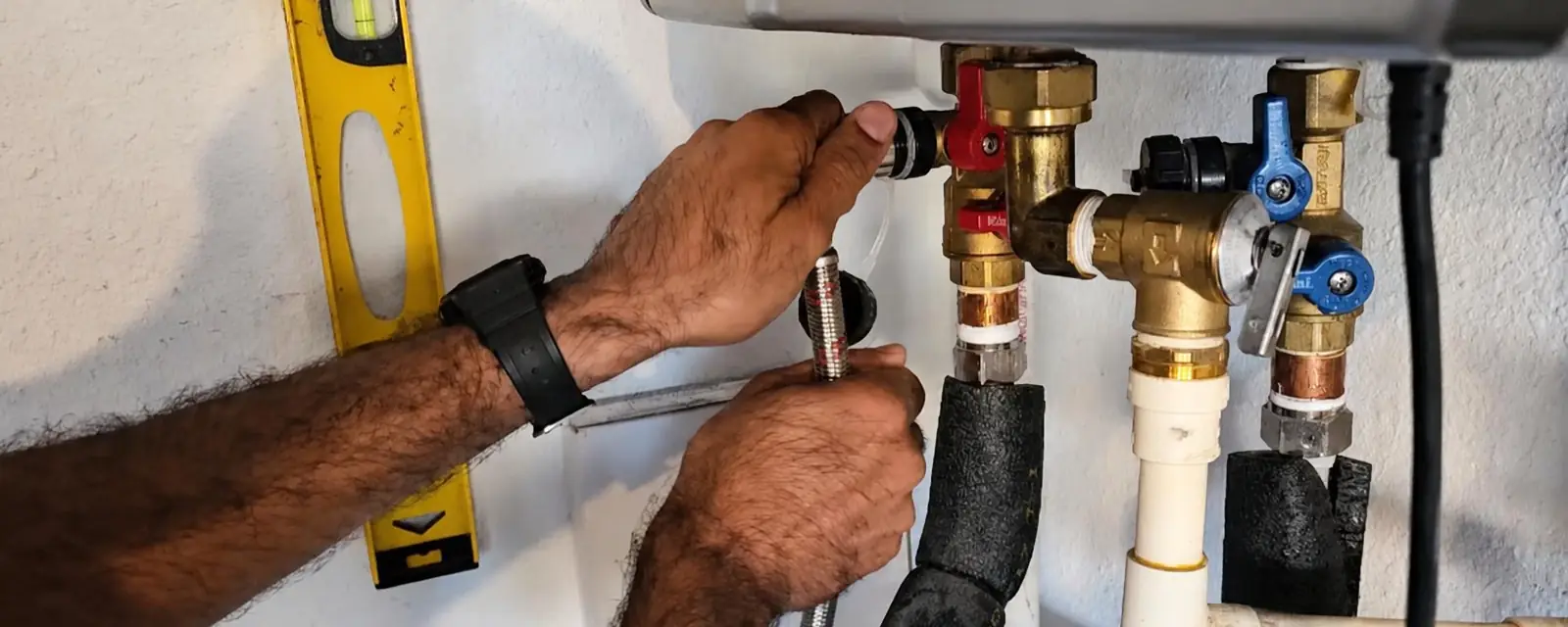
Tankless units move a lot of water through narrow passages. They work best with clean supply lines, working shutoff valves and correct pressure. A plumber looks at the old connections, the relief valve discharge path and the drain nearby.
Older galvanized or heavily scaled fittings may crumble when disturbed. Replacing them at the heater adds parts and time. Many installers also add isolation valves so the unit can be flushed later. Those valves are inexpensive compared with the unit but they are labor to fit.
The home's pressure matters too. In Gwinnett County the pressure reducing valve on the house side of the meter is the homeowner's responsibility. A failing valve can send high pressure into a new heater, so a plumber often tests it during the visit. You can check static pressure at an outdoor spigot with an inexpensive gauge.
Want a tankless quote that makes sense?
Call the line and a licensed plumber will walk through venting, gas and piping needs for your home.
Extras That Add to the Bill
Several items appear on quotes that surprise homeowners. A condensate drain line is needed for high-efficiency gas units because they produce acidic water. Some need a neutralizer cartridge. A recirculation pump or return line shortens the wait for hot water but adds piping and a power source.
Other common extras include a new gas shutoff, a sediment filter, a dedicated electrical outlet for the control board and wall bracket reinforcement. Disposal of the old tank is usually a line item too.
Ask which of these are included and which are optional. A low base price that leaves out venting or a gas upgrade is not a lower price. It is a different scope. Compare quotes by listing the same items side by side.
How to Compare Quotes Fairly
Ask every installer for the same written scope. It should name the unit capacity, the fuel, the vent route, the gas line work, the electrical work, the valves and the permit handling if any applies. Permit rules vary, so ask the Peachtree Corners Building Division what applies to your address.
- Ask for the load calculation. A good quote shows why a unit size was chosen.
- Ask who handles the gas line. Make sure sizing is part of the plan.
- Confirm the vent material and route. It should match the unit instructions.
- Ask about the old heater. Confirm that removal is included.
- Check the license. Georgia publishes a free GOALS licensee search through the Secretary of State.
When a New Tank Is the Smarter Choice
Tankless is not right for every house. If the venting path is long, the gas line is far away or the panel cannot support an electric unit, the total cost climbs fast. A new tank heater may meet your needs for much less work.
Households with modest hot water demand can also do well with a tank. Large households with several bathrooms often gain more from a tankless system. We are happy to talk through both choices on our water heater replacement page before you decide.
Lifespan and savings claims vary by model, water quality and usage. Treat any promise of a specific payback period with caution until you see the numbers for your own home.
Tankless Questions from Peachtree Corners Homeowners
Usually the scope differs. One quote may include venting, gas sizing and a new shutoff, while another leaves them out. Ask both installers for a written scope and compare the same items.
Often a gas tankless unit needs more gas than a tank heater, so the line may need an upgrade. A licensed plumber calculates the total load of every gas appliance before deciding.
Sometimes. The unit mounts on a wall and needs a vent path outside, clearances and drainage. A plumber checks those before confirming the spot.
Mineral scale can build up inside any heater. Gwinnett County does not publish a hardness figure in its report, so test your tap and ask your installer about flushing schedules.
Permit rules vary by job. Ask the Peachtree Corners Building Division about your address, and ask your plumber to explain what they handle.
Possibly. The Department of Energy says they need about 1,000 cubic feet of air space and a location that stays between 40 and 90 degrees Fahrenheit, so many closets will not work.