
Think You Have a Slab Leak? Act in This Order
Speed matters because water under a slab can undermine the floor and run up the bill.
- Turn off every fixture and appliance that uses water. Check that the ice maker and irrigation are off too.
- Read the water meter. Gwinnett County puts the meter in the front yard under a metal cover. If the leak-indicator wheel moves while everything is off, water is leaking somewhere.
- Shut off the main valve at the house and watch the meter again. If it stops, the leak is on the house side of the line.
- Feel for warm spots and listen for hissing. Warm floor patches may mean a hot line is leaking.
- Call (770) 214-4545. Dispatch answers nights, weekends and holidays.
If water is coming up through the floor, stay off wet areas near outlets and appliances.
Signs a Leak Is Hiding Under the Foundation
Slab leaks rarely announce themselves.
Common clues include a bill that rises with no change in habits, a floor that feels warm in one spot, damp carpet near an outer wall and the sound of running water when the house is quiet. Cracks in tile or a musty smell may also appear.
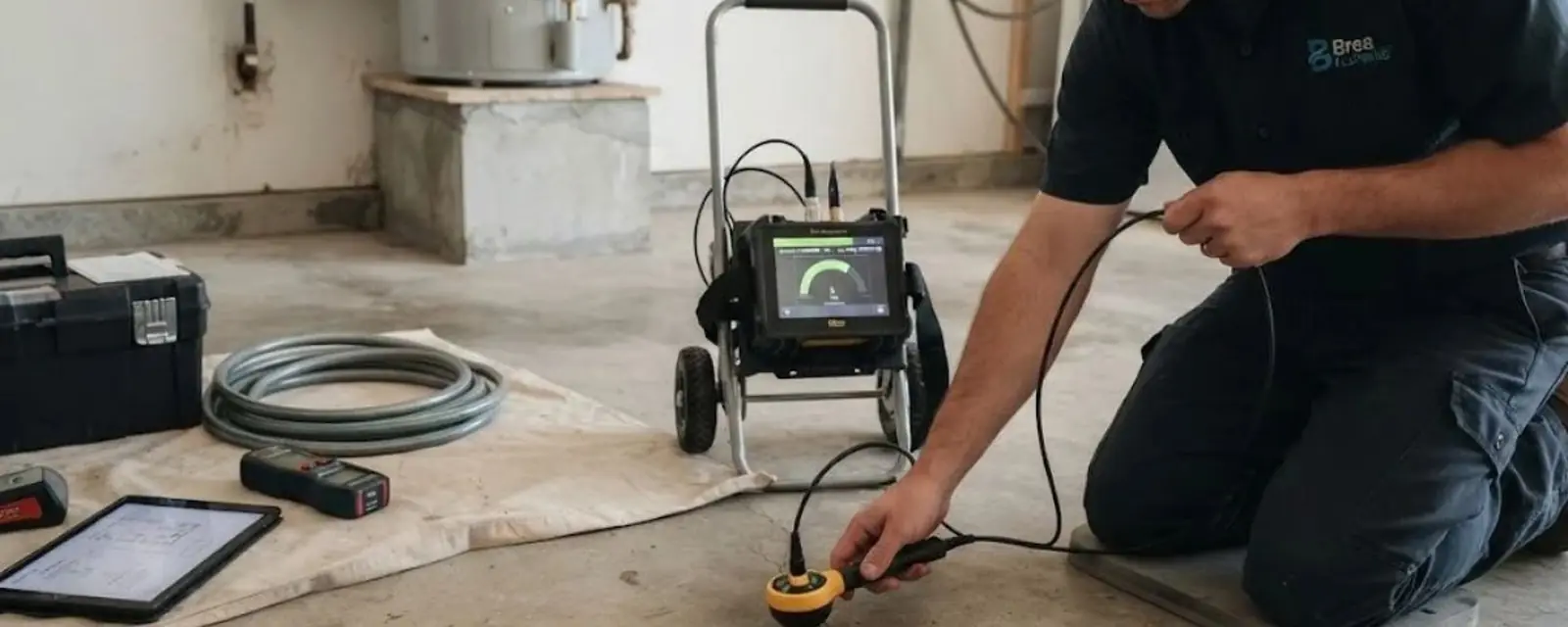
None of these proves a slab leak, so a plumber confirms with tests. We isolate sections of the supply line, listen with ground microphones and use thermal tools where they help. The goal is to find the leak within a small area before any concrete is cut.
If the leak turns out to be in the yard or in an exposed section, our water line repair crews handle that part.
Who Owns the Pipe? The Meter Is the Dividing Line
County and homeowner responsibility split at the water meter.
Gwinnett County Department of Water Resources treats pipes and fixtures on the customer side of the meter as the owner's responsibility. A leak under your slab is therefore a private repair, even if the water comes from the county's system.
The county offers leak adjustments to customers once every twelve months. Ask the county about eligibility after a repair, and keep your plumber's invoice and notes. We document where the leak was and what we repaired.
This is how the ownership line looks in practice.
Gwinnett County
- Public water main.
- Service line up to the meter.
- The meter itself.
You
- Pipes from the meter to the house.
- Lines under the slab.
- Fixtures and valves inside.
Repair Options for a Slab Leak
We lay out each path so you can choose.
| Option | What it involves | Best when |
|---|---|---|
| Spot repair. | Cut the slab above the leak, fix the pipe, patch the floor. | One leak in an otherwise sound line. |
| Reroute. | Abandon the leaking line and run new pipe through walls or attic. | Repeated leaks or hard-to-reach slab. |
| Repipe. | Replace failing supply lines in the whole house. | Pipes are failing in many places. |
A spot repair is the fastest fix, but it does not address a failing line. A reroute avoids concrete work and keeps the floor intact. We explain the tradeoffs and look at the age and material of your lines before recommending one. If the lines are old, a conversation about repiping belongs here.
Reroutes and repairs under or through a slab should follow Georgia's state minimum plumbing code, based on the 2024 International Plumbing Code (IPC). We explain the permit question for your address before any floor is opened.
Meter spinning with everything off?
Call the 24/7 line and a plumber will test for a slab leak.
What to Expect During a Slab Leak Repair
The work is more orderly than it sounds.
- We locate the leak. Listening gear and isolation tests narrow it to a small zone.
- We explain the options and the price. You decide before anything is cut.
- We protect your home. Floors are covered, dust is controlled and furniture is moved clear of the work.
- We make the repair or reroute. The fix is pressure tested before anything is closed.
- We patch and restore. Concrete is patched, and flooring work is coordinated with your flooring contractor.
What Moves the Price
No two slab jobs cost the same.
- Leak locationA leak under a kitchen costs more to reach than one in a garage corner.
- Option chosenSpot repair, reroute and repipe have different labor and materials.
- Flooring aboveTile, hardwood and carpet each add restoration work.
- Time of the callAfter-hours calls include overtime labor.
You hear the price before work starts, and we pause to talk if the scope changes.
Slab Leak Questions in Peachtree Corners
Yes. The line at (770) 214-4545 is open 24 hours a day, every day. Dispatch gives you the earliest window and tells you how to test the meter while you wait.
Warm floor spots, a rising bill, a meter that moves with everything off and the sound of running water are common clues. A plumber confirms with isolation tests and listening gear.
Gwinnett County Department of Water Resources treats the customer side of the meter as the owner's responsibility. Ask the county about leak adjustments, which are offered once per twelve months.
Not always. A reroute can avoid the slab entirely. If a spot repair is the best choice, we cut a small opening above the leak and patch it afterward.
A long-running leak can saturate the soil and cause problems. Early repair reduces that risk, which is why we recommend testing as soon as you suspect a leak.
Yes. Our Norcross coverage uses the same dispatch line. Call and give dispatch the address.