
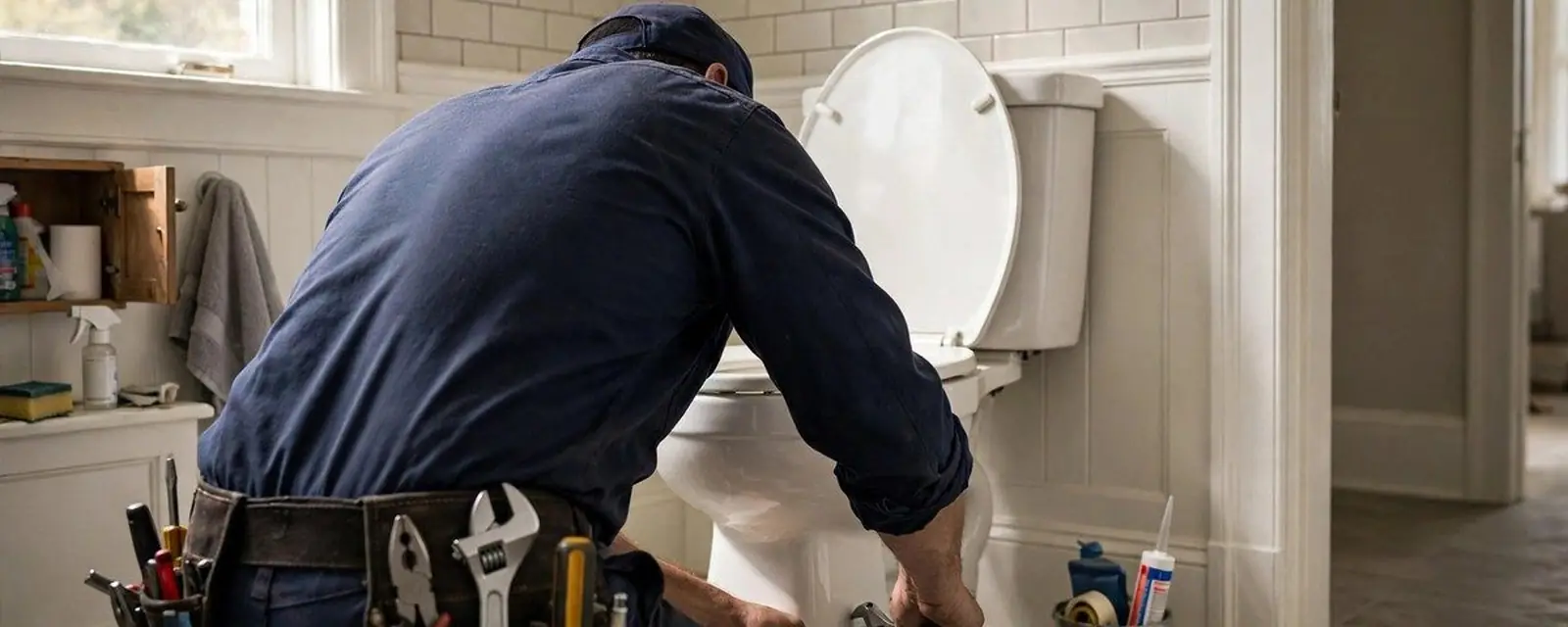
Toilet Overflowing? What to Do in the First Ten Seconds
The shutoff behind the toilet is your fastest tool.
- Close the supply valve. It is the small oval or round handle on the wall or floor behind the toilet. Turn it clockwise until it stops.
- Lift the tank lid and push the flapper down. If water is still rising, this stops the tank from refilling.
- Do not flush again. Each flush adds water to a bowl that is already full.
- Put towels around the base and move rugs out of the splash zone.
- Call (770) 214-4545. Dispatch answers nights, weekends and holidays.
If the main drain is the problem, other drains in the house will also run slow, and the plumber will check that too.
Is Your Toilet Quietly Leaking? Try the Dye Test
Many toilets waste water without making any noise.
Put a few drops of food coloring or a dye tablet in the tank and do not flush. After about ten minutes, EPA WaterSense says color in the bowl means the toilet leaks. Gwinnett County Department of Water Resources suggests waiting thirty minutes and also advises against flushing during the test. Either way, wait the longer time if you want certainty.
A leak that shows color usually means a worn flapper. WaterSense notes that most toilet leaks come from flappers that no longer seal. The part is inexpensive, and the water it saves adds up over a year.
The county also offers toilet leak detection kits. Call 678.376.6722 to ask about them.
Common Toilet Problems and What Fixes Them
Match what you see to the likely cause.
| Symptom | Likely cause | Usual repair |
|---|---|---|
| Runs on and off between flushes. | Worn flapper or chain. | Replace the flapper and adjust the chain. |
| Hissing after the tank fills. | Fill valve failing. | Replace the fill valve. |
| Water around the base. | Failed wax ring or loose bolts. | Reset the toilet with a new wax ring. |
| Weak flush. | Clogged rim jets or low tank water. | Clean the jets and set the water level. |
| Rises toward the rim. | Clog in the trap or drain. | Auger the toilet, then check the line. |
Toilet will not stop running?
Call the 24/7 line and a plumber will fix the part that is failing.
Why Older Toilets Cost More to Run
Age changes the water bill even when nothing looks broken.
WaterSense toilets use 1.28 gallons per flush or less. The current federal standard is 1.6 gallons per flush. Older toilets can use up to six gallons. If your toilet predates the federal standard, each flush may use several times what a new model needs.
That makes a repair-or-replace decision real money over time. A failing flapper on an old toilet is worth fixing if the porcelain is sound. A cracked bowl or a toilet that clogs weekly may be worth replacing.
Peachtree Corners has many homes from the 1970s and 1980s, so original toilets still turn up. We tell you what we see and let you choose.
What a Repair Visit Includes
Here is what happens after the plumber walks in.
- We test the symptom. The plumber runs the flush, checks the water level and looks for leaks at every joint.
- We shut off and open the tank. Most repairs are inside the tank, so this is where the answer usually sits.
- We replace the failed part. Flappers, fill valves, handles and supply lines are replaced with matching parts.
- We reset the toilet when the base leaks. That means a new wax ring and tightened bolts, followed by a leak check.
- We test again before leaving. You see the toilet flush clean and hold water.
Repair or Replace? How We Help You Decide
The cheapest fix is not always the smartest one.
Repair when the bowl and tank are sound and the problem is a single part. Replace when the porcelain is cracked, the toilet clogs often or it wastes far more water than a modern one. If a stubborn clog keeps returning, the problem may be in the drain line, and drain cleaning fixes that cause. A toilet that sits unevenly on the floor may signal a bigger leak, so the plumber checks the subfloor feel too.
- Parts neededA flapper and a full fixture swap are very different jobs.
- Condition of the floorWater damage at the base adds work before the new seal goes in.
- Time of the callNight and weekend calls include after-hours labor.
You hear the price before work begins.
Toilet Repair Questions in Peachtree Corners
Yes. The line at (770) 214-4545 is open 24 hours a day, every day. Dispatch tells you the earliest window and gives you shutoff steps while you wait.
A worn flapper or a failing fill valve is the usual cause. The tank loses water slowly, then refills. Replacing the part ends the cycle and saves water.
Add dye to the tank and do not flush. WaterSense says color in the bowl after about ten minutes shows a leak. Gwinnett County suggests waiting thirty minutes to be sure.
If the porcelain is sound and one part has failed, repair is usually enough. Older toilets can use up to six gallons per flush, so replacement may pay off if yours is that old.
Yes. A running toilet can waste hundreds of gallons a day, according to the county. If your bill jumped, our leak detection service can check the toilet and the rest of the house.
Yes. We cover Duluth and neighboring towns from the same dispatch line, so tell dispatch your address when you call.