
What It Means When Every Drain Backs Up
Each fixture in your home has its own drain pipe, but all of those pipes feed into one main line. Water from the kitchen, laundry and bathrooms joins together before it leaves the house. If the main line is blocked, wastewater has nowhere to go and rises in the lowest openings first.
That is why a first sign is often a floor drain or a basement tub filling with dirty water. The low fixtures are the weak points in the system. A toilet that bubbles when the washing machine drains tells the same story.
If only one sink is slow, the blockage is local and the main line is probably fine. When two or more areas react together, treat the main line as the prime suspect.
Common Causes of a Main-Line Blockage
Tree roots top the list. They enter through small joints in search of moisture, then expand until they catch paper and waste. Grease is next. It cools in the pipe and hardens, narrowing the opening a little more with each use.
Flushed wipes, paper towels and feminine products also cause blockages, even when labeled flushable. Older cast iron and clay lines can scale or crack, which gives debris a place to snag. A low section of pipe, sometimes called a belly, holds water and collects solids.
Rarely, the problem is outside your property. A blockage in the county main can send wastewater back toward houses on that line. That is one reason the first step is to find out where the blockage sits.
What to Do First
Act quickly to keep the backup from spreading.
- Stop using water. Do not flush, run the dishwasher or start laundry.
- Keep people and pets out of any room with sewage. Wastewater can carry bacteria.
- Find the cleanout. It is a capped pipe near the foundation or in the yard. Do not open it unless you know how to relieve pressure safely.
- Take photographs. Pictures help with any insurance claim.
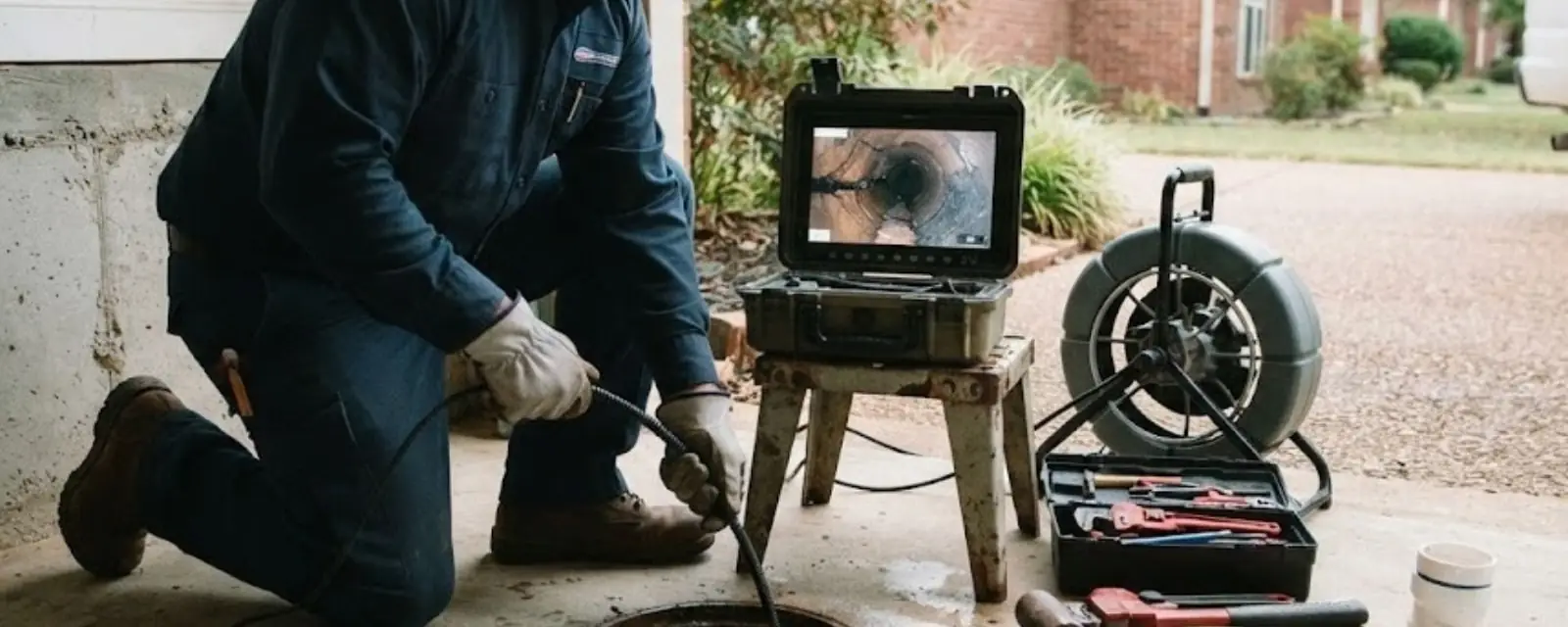
- Call a plumber. A camera shows where the blockage is and what caused it.
Avoid chemical drain cleaners. They cannot clear a main line and they create a hazard for anyone who has to open the pipe.
How a Plumber Clears and Diagnoses the Line
A plumber usually starts at the cleanout. A heavy cable machine with a cutting head opens the blockage. If grease or scale is heavy, hydro jetting scours the pipe wall with high-pressure water.
After the line is open, a camera inspection shows why it blocked. It reveals roots, cracks, offset joints and low spots. A sewer camera inspection gives you a recording of the pipe, which is useful for repair decisions and for any conversation with the county.
If the camera finds damage, repair options range from spot repairs to full replacement. Your plumber should explain each option and what it would take to complete.
Every drain backing up?
Call the line and a plumber will locate the blockage and explain who owns that section.
Why the Backup Returns Without a Repair
Clearing a line removes the blockage, but it does not fix the cause. Roots grow back through the same joints. Grease builds again if habits do not change. A belly keeps holding water until the pipe is replaced.
If your drains clog twice in a year, ask for a camera look rather than another cable pass. The cost of repeated cleaning can add up and a repair may be the better investment. Annual or biannual cleaning is sometimes the right plan for a line with persistent roots.
Keep notes about dates, symptoms and what each visit found. That record helps a plumber see patterns and decide when repair is justified.
What a Cleanout Tells You
A cleanout is a capped access pipe on your sewer line. It gives a plumber a direct path to the main without removing a toilet. Most homes have one near the foundation or in the front yard, often near where the line leaves the house.
You can learn a lot from the cleanout without opening it. If the cap is wet or stained, wastewater may be pushing against it. If the cleanout sits below the level of the fixtures, it is often the first place a backup shows itself.
Opening a cleanout under pressure can release a surge of sewage, so leave that step to a professional. A plumber will relieve pressure carefully, insert the cable and watch where the water goes. If water flows freely once the cap is off, the blockage sits below that point. If it still backs up, the problem is between the cleanout and the house.
Knowing the cleanout location also helps you tell a plumber exactly where to start. Mark it with a small stake or note in your home records so it stays easy to find.
When Insurance and Landlords Get Involved
A whole-house backup raises questions beyond plumbing. Renters should tell the landlord or property manager right away, because the main line usually belongs to the building. Owners should check their policy for sewer backup coverage, which is often an optional add-on rather than a standard feature.
Document everything before cleanup begins. Photograph the affected rooms, the fixtures and any damaged belongings. Keep receipts for the plumber and any cleaning service. Ask the plumber for a written description of what was found, and ask for the camera recording if one was made. That record shows the cause and the location of the blockage, which helps both an insurer and a landlord understand what happened.
Prevention That Actually Works
Keep grease out of the sink. Pour it into a can, let it set and put it in the trash. Flush only human waste and toilet paper. Use strainers in showers and tubs.
If a large tree grows near your sewer line, plan a camera inspection every year or two. Know where your cleanout is and keep it accessible. A blocked cleanout cap delays help in an emergency.
For rental properties and multifamily buildings, set up a routine cleaning schedule for main lines. Shared systems back up faster because more people use them.
Whole-House Backup Questions in Peachtree Corners
If a toilet, tub and sink all slow or gurgle together, the main line is the likely location. A floor drain that bubbles is another strong sign.
Yes, especially if sewage reaches the floor. Stop using water and call a plumber. If you cannot reach the problem, call the county's 24-hour line for public sewer concerns.
If you suspect the county section, ask for an inspection before repairs. A plumber with a camera can show where the blockage sits, which helps you decide.
Yes. Roots affect any sewer line near mature trees. Our Norcross plumbers see this regularly and can inspect the pipe by camera.
Yes. Our Duluth service area is part of the same dispatch line, and a plumber will arrive with a cable machine and a camera.
Coverage varies by policy. Many policies exclude backups unless a specific endorsement was added. Photograph the damage and ask your insurer what applies.