
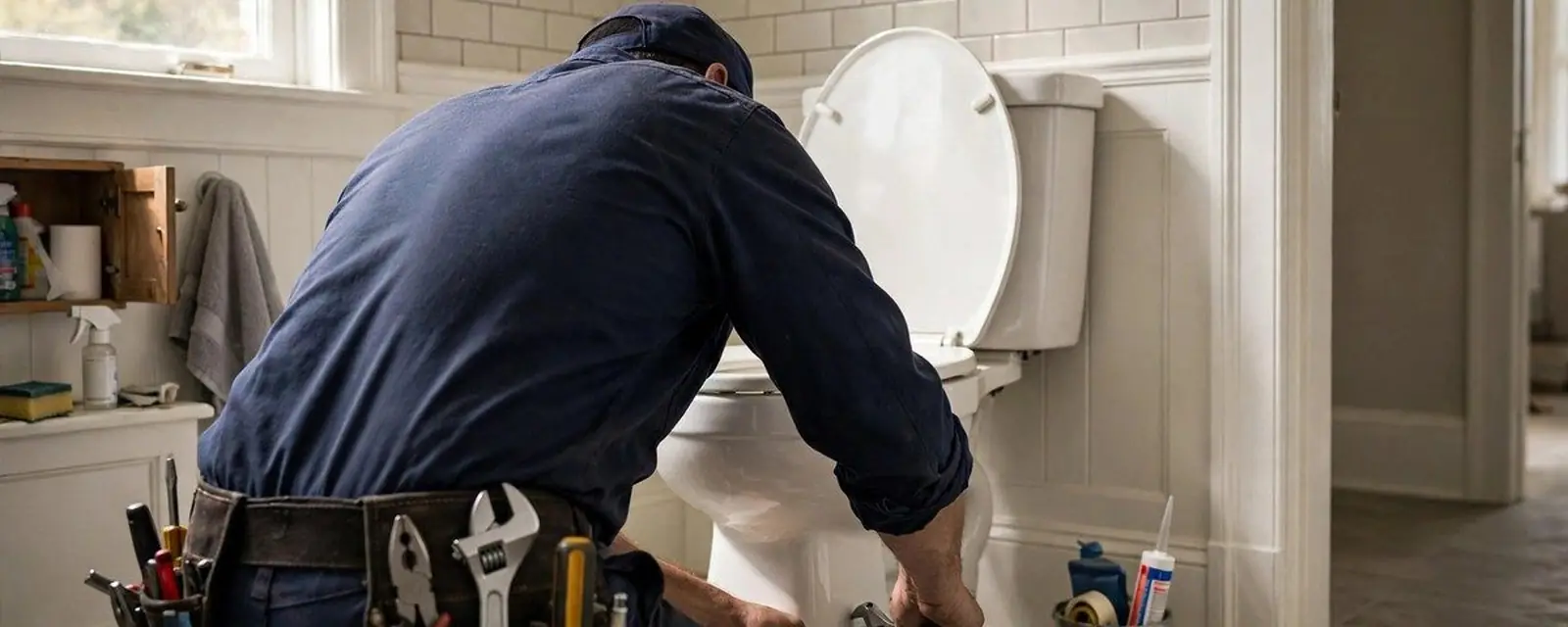
Is the Toilet Really Clogged?
Not every toilet problem is a clog. Check three things before you grab the plunger.
If the bowl fills and slowly sinks, it is a partial clog. If the water rises to the rim and stays, it is a full clog. If the bowl keeps refilling after you flush, the tank may be failing instead, and that is a toilet repair question and not a drain question.
Notice what else is happening in the house. A toilet that clogs alone has a local problem. A toilet that gurgles when a sink drains, or a tub that backs up when you flush, points to the main line.
Stop the Overflow First
If water is climbing toward the rim, act before you plunge.
- Lift the tank lid and press the flapper down. This stops water from entering the bowl.
- Turn the supply valve clockwise. The valve is on the wall or floor behind the toilet.
- Remove excess water. Bail out the bowl with a cup into a bucket if it is near the top.
- Put down towels and keep children away. Overflow water from a toilet carries bacteria.
Do not flush again to see whether it cleared. A second flush adds a full tank of water to a bowl that cannot take it, and that is how a clog becomes a flood.
Wear rubber gloves for everything that follows. Overflow water carries bacteria, so wash your hands well afterward and clean the floor with a household disinfectant once the water is gone.
Plunge the Right Way
A flat-flange plunger works best on a toilet. The flange is the soft fold at the bottom, and it seals the drain opening.
- Seat the plunger. Cover the drain hole and press down until the cup seals without air gaps.
- Push gently first. The first push forces air out, and a hard first push splashes water.
- Plunge with steady strokes. Ten firm pushes and pulls in a row work better than random jabs.
- Break the seal and watch. If water drains, pour in a small amount to confirm. If it does not, repeat once or twice.
Stop if the water level rises toward the rim. A full bowl is not an excuse to push harder, and repeated plunging can force the clog farther in.
Use an Auger When the Plunger Fails
A toilet auger, also called a closet auger, has a curved tip that follows the toilet's internal trap. It is safer for porcelain than a standard drain snake.
Feed the tip into the bowl and crank the handle clockwise. When you feel resistance, keep cranking to break up the clog or hook it. Pull the cable back slowly and clean it as it comes out.
Work slowly and let the cable do the work, because forcing it can scratch the porcelain. If the auger passes through and the toilet drains, flush once to confirm. If the cable meets no clog and the toilet still will not flush, the blockage may be beyond the trap. At that point, call a plumber for drain cleaning with a longer cable or a camera.
Toilet overflowing now?
Shut off the supply valve and call the 24/7 line. A plumber can clear it and check the main line.
What Not to Do
Some quick fixes make clogs worse or put you at risk.
- Do not pour chemical drain cleaner into a clogged toilet, because it can burn skin and crack porcelain.
- Do not use a wire hanger, which scratches the bowl and can lodge in the trap.
- Do not flush wipes labeled flushable, since they do not break down like paper.
- Do not keep flushing after a failed attempt.
- Do not mix chemicals, which can release harmful fumes.
If a child dropped a toy into the toilet, stop. Plunging pushes the object deeper, and a plumber can retrieve it safely.
When the Clog Points to the Main Line
Several signs suggest a problem past the toilet.
| What you see | What it suggests | Next step |
|---|---|---|
| Only one toilet clogs. | Local clog or heavy use. | Plunge or auger. |
| Several fixtures gurgle. | Main line blockage. | Call a plumber. |
| Floor drain backs up. | Main line or sewer lateral. | Call a plumber. |
| Clogs return within days. | Roots, damage or buildup. | Camera inspection. |
In Peachtree Corners the sewer is split between you and the county. Gwinnett County owns the main and the lateral inside the public right-of-way, and the owner is responsible for the rest. A camera inspection shows which section holds the blockage. Homes in Duluth and Dunwoody follow different utility lines, so confirm which provider serves your address.
Prevent the Next Clog
A few habits keep toilets running freely.
- Flush only toilet paper and human waste.
- Use less paper per flush, or flush twice if needed.
- Keep a small trash can with a lid in the bathroom for wipes and feminine products.
- Teach children to ask before they flush anything unusual.
- Fix a weak flush early, because low water in the bowl can leave waste behind.
Older toilets can have a weak flush because of mineral buildup in the rim jets or a failing flapper. A plumber can test the flush and tell you whether a repair or a new toilet makes sense.
EPA WaterSense notes that older toilets can use up to 6 gallons per flush, while WaterSense models use 1.28 gallons or less. A newer bowl is designed to move waste with less water, which often means fewer clogs, though the right choice depends on the age and condition of your drain line.
Clogged Toilet Questions From Peachtree Corners Homes
Stop first. Lift the tank lid, press the flapper down and close the supply valve. Once the water drops, plunge with a flat-flange plunger. Do not flush again until the bowl drains.
Common causes include using too much paper, flushing wipes, a weak flush or a partial blockage farther down the line. A plumber can test the flush and run a camera if the clogs keep returning.
Gwinnett County Department of Water Resources suggests adding dye to the tank, waiting 30 minutes without flushing and checking the bowl for color. Color means the flapper leaks and should be replaced.
Gwinnett County owns the main and the lateral portion inside the public right-of-way. The owner is responsible for the lateral outside the right-of-way. A camera inspection shows where the blockage sits.
It becomes one when the bowl overflows, when sewage backs up into other drains, or when it is your only toilet. Call the 24/7 line if the water will not stop rising or if several fixtures are affected.
We advise against it. Chemicals sit in standing water, can crack porcelain and create a hazard for anyone who plunges afterward. A plunger or auger is safer and more effective.