
Why Under-Slab Repairs Cost More Than Other Repairs
Pipes in a wall or crawl space are easy to see and reach. Pipes under a concrete slab are not. The plumber has to find the leak, open the floor, make the repair and then close it again. Each stage adds labor, tools and time.
Some jobs also involve moving furniture, protecting floors and sealing the work area against dust. Flooring that must be removed and replaced adds even more. That is why the plumbing part of an under-slab bill is often only a portion of the full project.
A quote should separate the plumbing work from the restoration. That way you can see what each part includes and compare offers fairly.
Finding the Leak Comes First
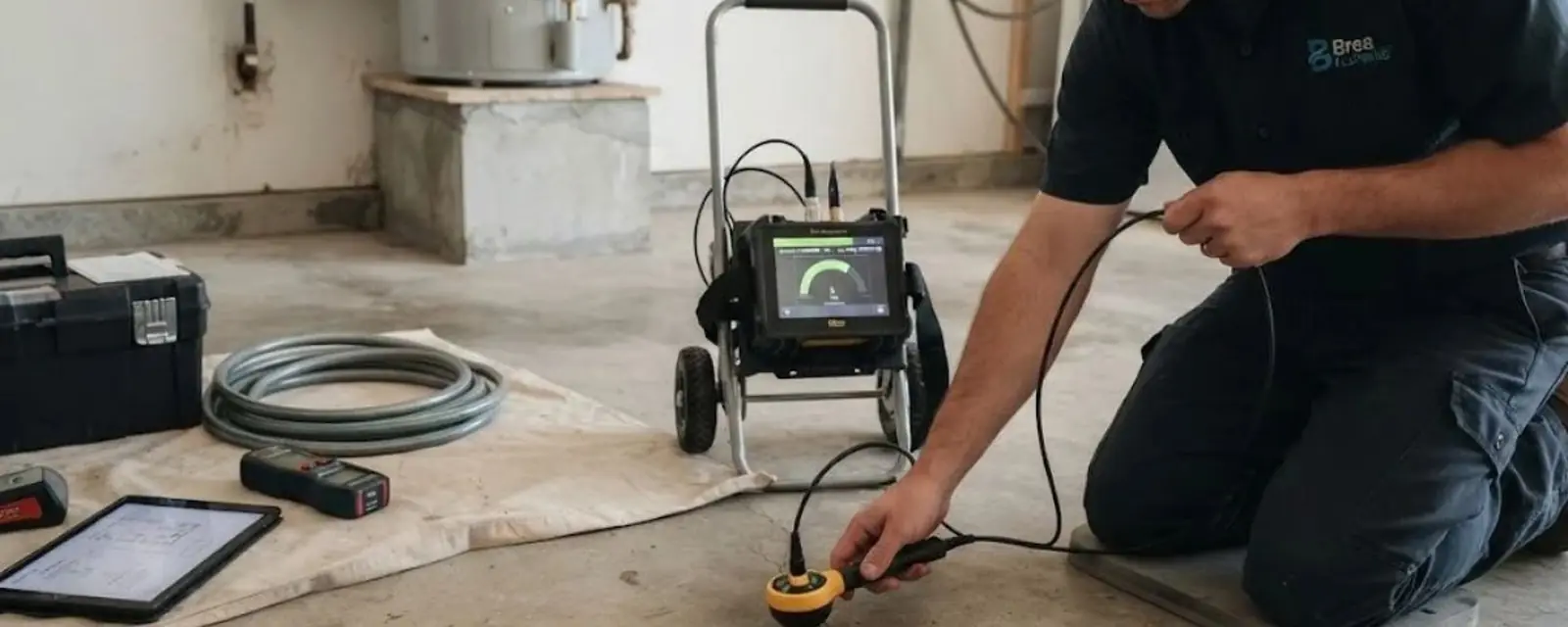
Before any cutting, a plumber confirms where the leak is. Methods include acoustic listening devices, thermal imaging and pressure tests. These tools narrow the location to a small area so the opening can be small too.
Good leak location saves money. A precise mark means a smaller hole, less demolition and a quicker repair. A rough guess means a bigger opening and a higher bill.
If you suspect a hidden leak but have not confirmed it, start with leak detection. It keeps you from paying for work you may not need.
The Repair Methods and What Each Involves
There are three main approaches. The plumber chooses based on where the pipe is and how damaged it looks.
| Approach | What it involves | Cost pattern |
|---|---|---|
| Spot repair through the slab. | A small opening is cut, the pipe is repaired and the slab patched. | Lowest plumbing cost when the leak is isolated. |
| Reroute above the slab. | A new line runs through walls or the attic and the old line is capped. | Moderate cost, avoids concrete work. |
| Partial or full repipe. | Multiple sections are replaced, often with new material. | Highest cost, addresses widespread aging. |
A spot repair works best when one section has failed and the rest of the line looks sound. Rerouting makes sense when access under the slab is difficult. Repiping is considered when the pipe has repeated failures or visible corrosion.
Pipe Material and Depth Change the Work
Copper, PEX, CPVC and galvanized pipe each behave differently when repaired. Copper can be cut and fitted with new sections. Galvanized steel is often brittle, and fittings may crack when disturbed. PEX is flexible and can be repaired with approved fittings.
Depth matters too. A shallow pipe near the slab surface needs less digging than one buried deeper. If the line crosses a thick or reinforced section, cutting takes longer.
The plumber should note what material they find and explain how it affects the repair. If the old pipe is in poor shape, a short repair may only move the problem to the next weak spot.
Think a pipe is leaking under the slab?
Call the line and a plumber will locate the leak before anyone opens the floor.
Restoration Costs People Forget
Closing the opening is more than pouring concrete. The patch must cure, and flooring needs to be matched or replaced. Tile, hardwood, vinyl and carpet each have different needs.
Cabinets, appliances and fixtures near the work area may need to be moved. Walls may need patching if a reroute passes through them. If water has soaked drywall or insulation, drying and mold prevention may be required.
Ask who handles restoration. Some plumbers do the plumbing only and leave flooring to others. Others coordinate the full job. Either way, get the scope in writing so nothing is missed.
Signs That Point to a Leak Under the Floor
Slab leaks hide well, but they do leave clues. Knowing the signs helps you act before the damage grows and the cost rises with it.
Common signs include a hot spot on the floor, the sound of running water when all fixtures are off, a sudden rise in the water bill and damp carpet near an exterior wall. Cracks in walls or floors, or baseboards that pull away, can also point to moisture under the slab.
Hot water lines leak more noticeably, because the warm water heats the floor above. If you feel a warm patch under bare feet, mention it when you call.
Use the meter test before you call. Turn off all water and check whether the leak indicator keeps turning. If it does, water is escaping somewhere. Then you can ask a plumber to narrow the location using listening equipment. A confirmed leak under the slab gives you the information you need to compare repair options with a clear head rather than a guess.
Questions About Timing and Disruption
Homeowners often ask how long the house will be torn up. The honest answer depends on the method and the finish. A small spot repair may take a day or two, while a reroute or repipe takes longer. Drying, curing and flooring work add time on top of that.
Ask the plumber to describe the schedule in stages. Locating the leak comes first, then the repair, then pressure testing, then restoration. Knowing the stages helps you plan where to stay, which rooms to empty and when water may be shut off. If the water must be off for part of a day, ask the crew to tell you the likely window in advance.
How to Evaluate a Quote
A solid quote lists the leak location method, the repair approach, the pipe material and the restoration scope. It also explains what happens if the plumber finds something unexpected after opening the floor.
- Ask how the leak was located. Confirmation should come before demolition.
- Ask about alternatives. Rerouting may cost less than a spot repair in some homes.
- Ask what is included. Concrete, flooring, drywall and cleanup should be itemized.
- Ask about water damage. Drying may be needed.
- Check the license. Georgia's GOALS search is free through the Secretary of State.
Our slab leak repair team is happy to review another company's quote and explain the terms.
Under-Slab Repair Questions from Peachtree Corners
Coverage varies. Many policies cover resulting damage but not the pipe itself. Photograph everything and ask your insurer before work begins.
Sometimes. Rerouting the line above the slab avoids concrete work. A plumber decides based on pipe layout and the condition of the old line.
It depends on the method and the restoration. A spot repair is quicker than a reroute or repipe. Ask the plumber for a realistic window after the leak is located.
Yes. Our Dunwoody service page covers the area, and the same dispatch line takes slab leak calls.
Yes. See our Johns Creek plumber page for details, and call the line to book leak detection first.