
Warning Signs of a Hidden Water Leak
Leaks often hide for weeks or months. The first clue is usually on paper, not in the house. A water bill that climbs without any change in habits points to a leak somewhere on the property.
Other signs include the sound of running water when everything is off, damp spots on walls or ceilings, warm patches on floors, musty smells and peeling paint. In the yard, a soggy spot or unusually green grass near the meter line can mean a buried leak.
A running toilet is the most common cause. The Environmental Protection Agency says the average home loses more than 9,300 gallons a year to leaks, and about one home in ten loses 50 gallons or more per day.
The Two-Hour Meter Test
Gwinnett County Department of Water Resources recommends a simple meter test. It works because the meter measures every drop that enters your property.
- Turn off all water. Close faucets, stop the dishwasher and washer, and make sure the ice maker is not filling.
- Find the meter. In Peachtree Corners it sits in the front yard under a metal cover.
- Read the meter. Write down the numbers or take a photo.
- Wait two hours. Do not use any water during that time.
- Read it again. If the numbers changed or the leak indicator wheel moved, water is escaping.
Keep the area around the meter box clear, because the county asks for about one foot of space on every side.
How to Read the Leak Indicator
Most residential meters have a small wheel or triangle dial that spins when any water flows. It moves fast enough to see even with a very small leak. If the wheel turns while every fixture is off, you have a leak.
Look closely. A slow turn means a small drip. A steady spin means a larger leak. Take a photo of the dial so you can compare later or show it to a plumber.
If the meter is moving, shut off the main valve at the house and check again. If the meter stops, the leak is inside the house. If it keeps moving, the leak is between the meter and the shutoff valve.
Check the Toilets with Dye
Toilets leak silently because water slips from the tank to the bowl without a sound. The dye test takes only a few minutes.
Add a few drops of food coloring or a dye tablet to the tank. Do not flush. Wait about 30 minutes, which is what the county suggests, though the EPA says color may appear in 10 minutes. If color shows in the bowl, the flapper or fill valve is leaking.
A worn flapper is the cause in most cases, and it is a low-cost fix. A running toilet can waste more than 200 gallons a day, so the repair pays for itself quickly. If you want help, our toilet repair team fixes flappers and fill valves.
Meter still moving?
Call the line and a plumber will pinpoint the leak without tearing into walls.
Other Places to Check
After toilets, look at faucets, showerheads and outdoor spigots. A faucet dripping once per second wastes more than 3,000 gallons a year, according to the EPA. A showerhead that leaks ten drips a minute wastes more than 500 gallons a year.
Check the water heater for moisture around its base, and look under sinks for damp cabinet floors. Walk the yard and look for wet patches or sunken ground. Check irrigation valves, since a stuck valve can run all day.
| Location | What to look for | Typical sign |
|---|---|---|
| Toilet tank. | Color in the bowl after dye. | Hissing or periodic refilling. |
| Under sinks. | Damp cabinet or corrosion. | Musty smell. |
| Water heater. | Moisture at the base. | Rust streaks. |
| Yard line. | Soggy ground near the meter. | Higher bills. |
| Slab or wall. | Warm floor or stained drywall. | Sound of running water. |
What Hidden Leaks Do to a House
A small leak is not just a waste of water. It also feeds mold, softens wood and loosens flooring. Left alone, it can rot framing and ruin drywall, and the repair bill will grow far beyond the cost of fixing the pipe.
Slow leaks inside walls are especially risky because you cannot see them. Moisture can sit for months. By the time paint bubbles or a ceiling stains, the damage may already be extensive.
Leaks under slabs can undermine flooring and cause soil movement around a foundation. Leaks in the yard can wash out soil and create soft spots that become tripping hazards.
Check your water bill every month and compare it with the same period last year. A sharp rise with no change in habits is one of the earliest warnings you will get. Take a photo of the meter at the same time each month so you can spot changes quickly. If you travel often, shut off the main valve before you leave. That one habit prevents the worst damage from a burst line while you are away.
Keep Simple Records That Help Later
A little paperwork makes leak problems easier to solve and easier to explain to a utility or insurer. Write down the meter reading and date each time you run the two-hour test. Save photos of the dial, of any wet spots and of any repairs.
Keep copies of each water bill so you can compare months. If you have a plumber document the repair, ask for a note that names the date, the location of the leak and the work done. Those details support a leak adjustment request and show that you acted promptly.
When to Call a Leak Detection Plumber
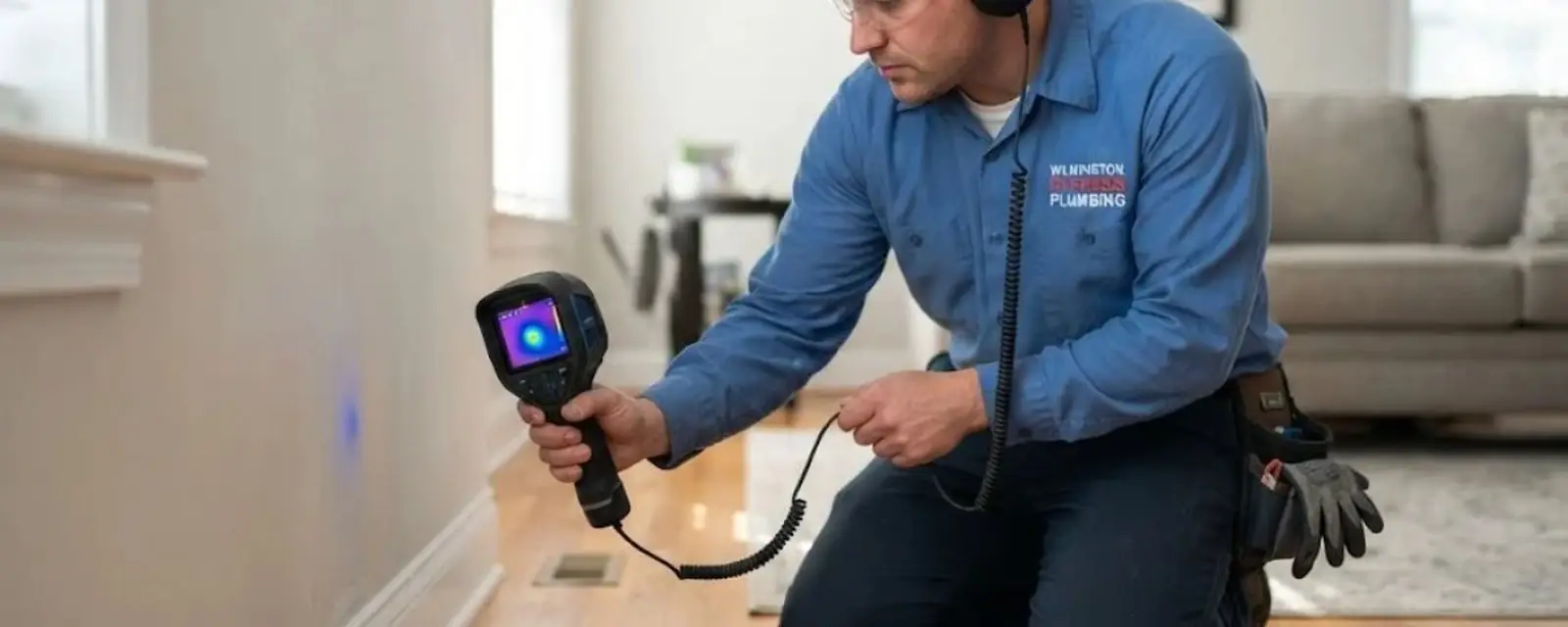
If the meter test fails and you cannot find an obvious cause, call a plumber. Professional detection uses acoustic sensors that listen for the sound of escaping water and thermal cameras that show temperature differences in walls and floors.
These tools locate a leak without opening walls. That saves repair costs and avoids unnecessary damage. If the leak is on the line between the meter and the house, a water line repair may follow.
Call sooner if you see ceiling stains, hear water in the walls or notice mold. Moisture damage spreads quickly and can lead to structural issues if left alone.
Leak Detection Questions in Peachtree Corners
Look in the front yard near the street for a metal cover. Lift it carefully and keep the area clear for about a foot around the box.
Gwinnett County offers one leak adjustment every 12 months. Contact the county's billing office after the repair and keep your documentation.
It reliably shows whether water leaks from the tank to the bowl. Wait at least 10 minutes and do not flush during the test.
The leak is inside the house. Check toilets, faucets and appliances, and call a plumber if you cannot find it.
Yes. Both are part of our service area, and the dispatch line covers them. Use the town pages for details.